
$43.00
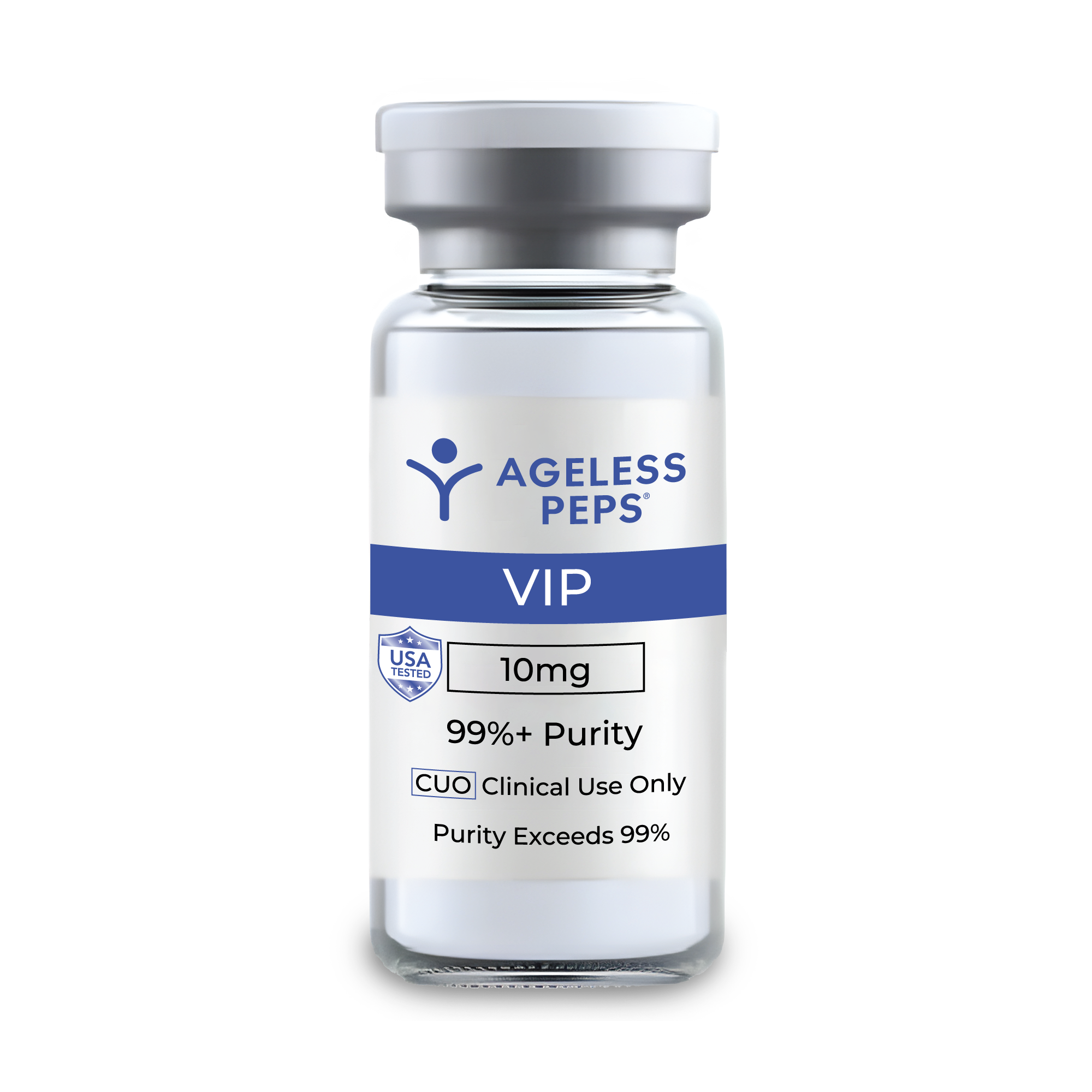
VIP (Vasoactive Intestinal Peptide) is a 28-amino-acid neuropeptide belonging to the glucagon/secretin superfamily. It functions as a potent vasodilator and neuromodulator, signaling through VPAC1 and VPAC2 receptors to regulate smooth muscle tone, immune responses, and neuroendocrine communication.
In neuroimmunology and inflammatory disease research, VIP peptide is studied for its potential role in neuroprotection, immunomodulation, anti-inflammatory signaling, bronchodilation, and cardiovascular regulation. It is a major focus in preclinical investigations of autoimmune disorders, neurodegenerative conditions, and pulmonary hypertension.
$43.00
Available on backorder
VIP (Vasoactive Intestinal Peptide) is a 28-amino-acid neuropeptide belonging to the glucagon/secretin superfamily. Originally isolated from porcine intestinal tissue, VIP is widely distributed throughout the central and peripheral nervous systems, where it acts as a potent vasodilator and neuromodulator. In preclinical research, VIP signals primarily through two G protein-coupled receptors, VPAC1 and VPAC2, to regulate smooth muscle relaxation, exocrine and endocrine secretion, and immune cell homeostasis.
Note: The following observations are derived from preclinical models unless otherwise noted.
1. Neuroprotection and Neuroinflammation VIP has been shown in animal models to reduce microglial activation and attenuate the release of pro-inflammatory cytokines such as TNF-α, IL-6, and IL-1β. Studies in rodent models of neurodegeneration suggest that VIP can protect dopaminergic neurons and hippocampal circuits by activating anti-inflammatory pathways mediated through VPAC2 receptors.
2. Immunomodulation and Autoimmunity In experimental autoimmune models, VIP administration has demonstrated the ability to shift T-helper cell balance from Th1/Th17 toward Th2/Treg phenotypes, attenuating tissue-specific inflammatory damage. Preclinical research in models of rheumatoid arthritis and inflammatory bowel disease suggests VIP reduces joint inflammation and mucosal damage through inhibition of NF-κB signaling.
3. Cardiovascular and Pulmonary Function VIP acts as a potent vasodilator and bronchodilator in experimental preparations. In vitro studies on isolated airway smooth muscle demonstrate dose-dependent relaxation mediated via cAMP accumulation. Animal models of pulmonary hypertension have shown that VIP administration reduces pulmonary arterial pressure and right ventricular hypertrophy.
4. Clinical Research (Human Studies) VIP has been investigated in human clinical studies for pulmonary and immunological conditions. In patients with idiopathic pulmonary arterial hypertension, inhaled VIP produced temporary pulmonary vasodilation, reduced pulmonary arterial pressure, improved stroke volume and mixed venous oxygen saturation, and decreased pulmonary vascular resistance without significant adverse effects (Leuchte et al., study of 20 patients). In an open-label Phase II clinical trial, 20 patients with histologically confirmed active sarcoidosis received nebulized VIP for 4 weeks; VIP inhalation was safe and well-tolerated, significantly reduced TNF-α production by bronchoalveolar lavage cells, and induced regulatory T-cells while downregulating the inflammatory status of treated patients without causing systemic immunosuppression (American Journal of Respiratory and Critical Care Medicine, 2010). A synthetic VIP analog (Aviptadil) has also been studied intravenously in patients with acute respiratory distress syndrome (ARDS), demonstrating immunoregulatory effects in critically ill patients.
Our products are made using a freeze-drying (lyophilization) process, which helps keep them stable during shipping for up to 3–4 months.
When the peptide is in its dry powder form, it can be stored at room temperature until you are ready to use it.
Once the peptide is mixed with bacteriostatic water (reconstituted), it should be stored in the refrigerator to maintain freshness and effectiveness. After mixing, the peptide will remain stable for up to 30 days when kept refrigerated.
Freeze-drying works by removing moisture while the peptide is frozen, leaving behind a dry, white powder that stays stable until it is rehydrated. This process helps protect the peptide and extend its shelf life.
After receiving your order, keep peptides away from direct light and heat. If you plan to use them within a few weeks or months, refrigeration below 4°C (39°F) is recommended, though short-term room-temperature storage is generally acceptable for dry peptides.
For long-term storage (several months to years), peptides should be kept in a freezer at −80°C (−112°F) to best preserve their quality and stability.
No COA available for this product.
Important: All peptides offered are intended for in-vitro and pre-clinical research only. Not for human use. Not approved by the US FDA for medical conditions.
Peptides are short chains of amino acids, typically under 50 residues, whereas proteins are much longer and fold into complex structures.
Because peptides are smaller, they tend to:
Bind more selectively to receptors
Have faster biological signaling effects
Be easier to synthesize and modify for research
This makes them ideal for targeted experiments in regeneration, metabolism, and cellular communication.
Ageless Pep provides high-purity, lab-tested research peptides.
The team is dedicated to scientific accuracy and excellent customer support.
The platform serves a community of researchers and scientists committed to innovation.
Depending on the study design, peptides can be researched through:
In-vitro assays
Animal models
Cell cultures
Subcutaneous or intravenous administration (in animals)
Each peptide behaves differently — for example, Semaglutide and Tirzepatide are studied via subcutaneous injections, while others like BPC-157 show effects even when administered orally or parenterally in rodent studies.
Peptides generally require:
Cool, dry storage when lyophilized
Refrigeration after reconstitution
Protection from UV light and temperature fluctuations
This preserves molecular integrity, preventing oxidation or breakdown of amino-acid chains.
Proper storage ensures reproducibility of experimental results.
Our products are made using a freeze-drying (lyophilization) process, which helps keep them stable during shipping for up to 3–4 months.
When the peptide is in its dry powder form, it can be stored at room temperature until you are ready to use it.
Once the peptide is mixed with bacteriostatic water (reconstituted), it should be stored in the refrigerator to maintain freshness and effectiveness. After mixing, the peptide will remain stable for up to 30 days when kept refrigerated.
Freeze-drying works by removing moisture while the peptide is frozen, leaving behind a dry, white powder that stays stable until it is rehydrated. This process helps protect the peptide and extend its shelf life.
After receiving your order, keep peptides away from direct light and heat. If you plan to use them within a few weeks or months, refrigeration below 4°C (39°F) is recommended, though short-term room-temperature storage is generally acceptable for dry peptides.
For long-term storage (several months to years), peptides should be kept in a freezer at −80°C (−112°F) to best preserve their quality and stability.
Scan the QR code or tap the button to apply for clinical-use-only wholesale pricing. Approval is fast and free.
Register as Wholesale →Continuing education and clinical training on peptide therapeutics. Sharpen your protocols and get certified.
Visit the Academy →