
$40.00
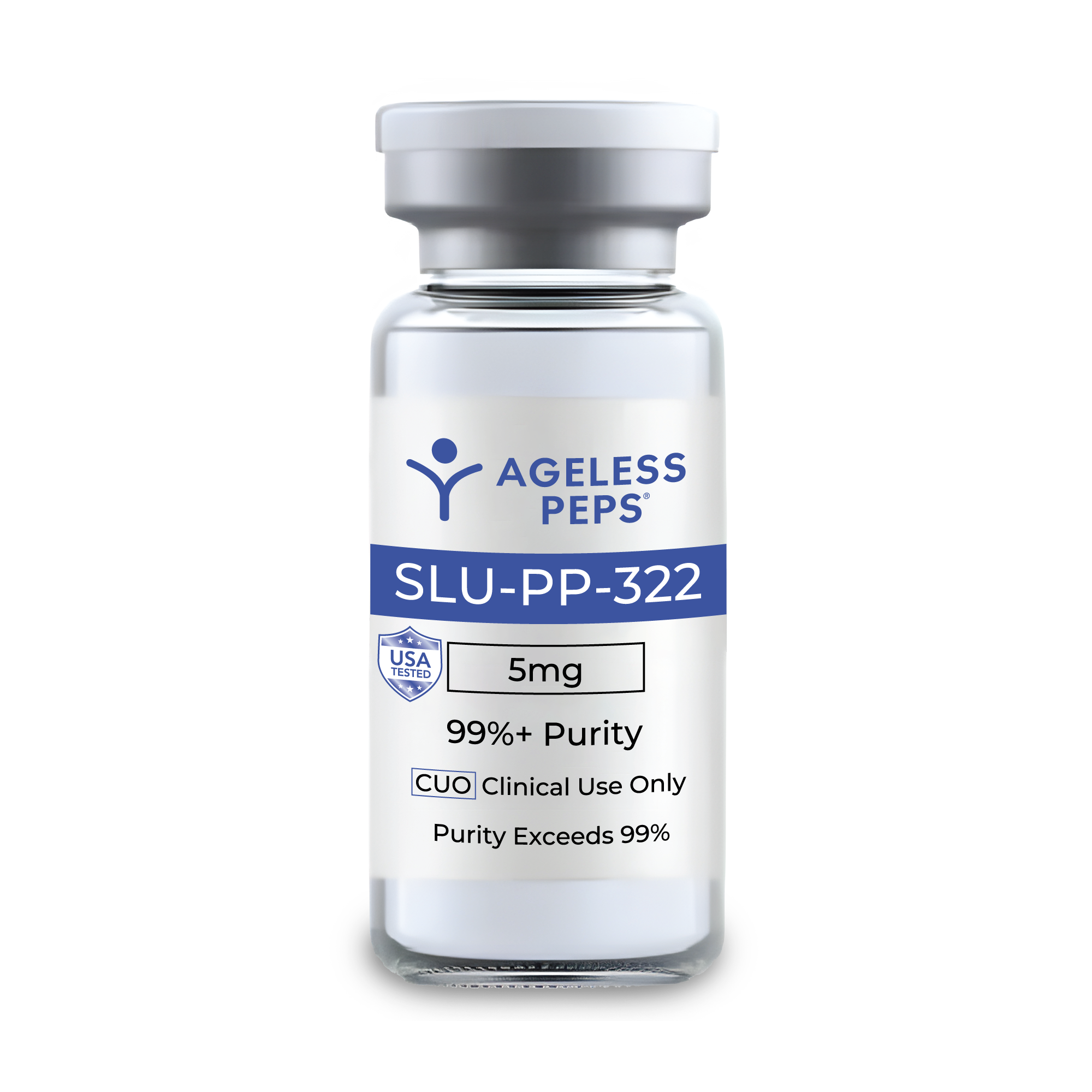
SLU-PP-332 is a synthetic small molecule agonist of the estrogen-related receptor (ERR) family, activating ERRα (EC₅₀ = 98 nM), ERRβ, and ERRγ—master regulators of mitochondrial biogenesis and oxidative metabolism. It does not bind estrogen receptors and is widely studied as an “exercise mimetic” that recapitulates exercise-induced metabolic adaptations at the transcriptional level.
In metabolic and exercise physiology research, SLU-PP-332 is studied for its potential role in mitochondrial biogenesis, oxidative phosphorylation enhancement, metabolic syndrome reversal, skeletal muscle fiber-type switching, and exercise-independent endurance improvement. It is a key pharmacological tool for dissecting ERR-mediated metabolic programming.
$40.00
Available on backorder
SLU-PP-332 is a synthetic small molecule that functions as a potent, non-selective agonist of the estrogen-related receptor (ERR) family of orphan nuclear receptors. It activates ERRα (EC₅₀ = 98 nM), ERRβ (EC₅₀ = 230 nM), and ERRγ (EC₅₀ = 430 nM), all of which are master regulators of mitochondrial biogenesis, oxidative metabolism, and energy homeostasis. Unlike estrogen receptor agonists, SLU-PP-332 does not bind estrogen receptors and exerts its effects exclusively through the ERR signaling axis. It is widely studied as an “exercise mimetic” compound that recapitulates aspects of exercise-induced metabolic adaptation at the transcriptional level.
Note: The following observations are derived from preclinical models unless otherwise noted.
1. Mitochondrial Biogenesis and Oxidative Metabolism In skeletal muscle cell lines, SLU-PP-332 has been shown to enhance mitochondrial function and cellular respiration by upregulating PGC-1α, a master transcriptional coactivator of mitochondrial biogenesis. Studies demonstrate increased expression of genes involved in oxidative phosphorylation (OXPHOS), fatty acid β-oxidation, and the tricarboxylic acid (TCA) cycle, recapitulating key metabolic adaptations typically observed following endurance exercise training.
2. Metabolic Syndrome and Obesity In mouse models of diet-induced obesity, SLU-PP-332 administration has been shown to counteract metabolic syndrome by improving glucose tolerance, reducing adiposity, and enhancing whole-body energy expenditure. These effects are attributed to ERR-mediated transcriptional reprogramming of skeletal muscle toward a more oxidative fiber-type profile, increasing the proportion of slow-twitch, mitochondria-rich muscle fibers.
3. Exercise Mimesis and Skeletal Muscle Adaptation SLU-PP-332 is utilized as a pharmacological tool to dissect the molecular mechanisms underlying exercise-induced metabolic benefits. In sedentary animal models, the compound has demonstrated the ability to increase running endurance, enhance fatty acid utilization during physical activity, and upregulate exercise-responsive gene programs including those governing angiogenesis and muscle fiber-type switching, independent of actual physical activity.
4. Clinical Outlook As of 2026, peer-reviewed human clinical trial data specific to SLU-PP-322 remains limited. Current evidence is derived primarily from preclinical models (in-vitro cell culture and in-vivo animal studies). Researchers continue to investigate this compound’s translational potential, and early-stage clinical evaluations may be underway. Consult published literature and clinical trial registries (e.g., ClinicalTrials.gov) for the most current status.
Our products are made using a freeze-drying (lyophilization) process, which helps keep them stable during shipping for up to 3–4 months.
When the peptide is in its dry powder form, it can be stored at room temperature until you are ready to use it.
Once the peptide is mixed with bacteriostatic water (reconstituted), it should be stored in the refrigerator to maintain freshness and effectiveness. After mixing, the peptide will remain stable for up to 30 days when kept refrigerated.
Freeze-drying works by removing moisture while the peptide is frozen, leaving behind a dry, white powder that stays stable until it is rehydrated. This process helps protect the peptide and extend its shelf life.
After receiving your order, keep peptides away from direct light and heat. If you plan to use them within a few weeks or months, refrigeration below 4°C (39°F) is recommended, though short-term room-temperature storage is generally acceptable for dry peptides.
For long-term storage (several months to years), peptides should be kept in a freezer at −80°C (−112°F) to best preserve their quality and stability.
No COA available for this product.
Important: All peptides offered are intended for in-vitro and pre-clinical research only. Not for human use. Not approved by the US FDA for medical conditions.
Peptides are short chains of amino acids, typically under 50 residues, whereas proteins are much longer and fold into complex structures.
Because peptides are smaller, they tend to:
Bind more selectively to receptors
Have faster biological signaling effects
Be easier to synthesize and modify for research
This makes them ideal for targeted experiments in regeneration, metabolism, and cellular communication.
Ageless Pep provides high-purity, lab-tested research peptides.
The team is dedicated to scientific accuracy and excellent customer support.
The platform serves a community of researchers and scientists committed to innovation.
Depending on the study design, peptides can be researched through:
In-vitro assays
Animal models
Cell cultures
Subcutaneous or intravenous administration (in animals)
Each peptide behaves differently — for example, Semaglutide and Tirzepatide are studied via subcutaneous injections, while others like BPC-157 show effects even when administered orally or parenterally in rodent studies.
Peptides generally require:
Cool, dry storage when lyophilized
Refrigeration after reconstitution
Protection from UV light and temperature fluctuations
This preserves molecular integrity, preventing oxidation or breakdown of amino-acid chains.
Proper storage ensures reproducibility of experimental results.
Our products are made using a freeze-drying (lyophilization) process, which helps keep them stable during shipping for up to 3–4 months.
When the peptide is in its dry powder form, it can be stored at room temperature until you are ready to use it.
Once the peptide is mixed with bacteriostatic water (reconstituted), it should be stored in the refrigerator to maintain freshness and effectiveness. After mixing, the peptide will remain stable for up to 30 days when kept refrigerated.
Freeze-drying works by removing moisture while the peptide is frozen, leaving behind a dry, white powder that stays stable until it is rehydrated. This process helps protect the peptide and extend its shelf life.
After receiving your order, keep peptides away from direct light and heat. If you plan to use them within a few weeks or months, refrigeration below 4°C (39°F) is recommended, though short-term room-temperature storage is generally acceptable for dry peptides.
For long-term storage (several months to years), peptides should be kept in a freezer at −80°C (−112°F) to best preserve their quality and stability.
Scan the QR code or tap the button to apply for clinical-use-only wholesale pricing. Approval is fast and free.
Register as Wholesale →Continuing education and clinical training on peptide therapeutics. Sharpen your protocols and get certified.
Visit the Academy →