
$40.00
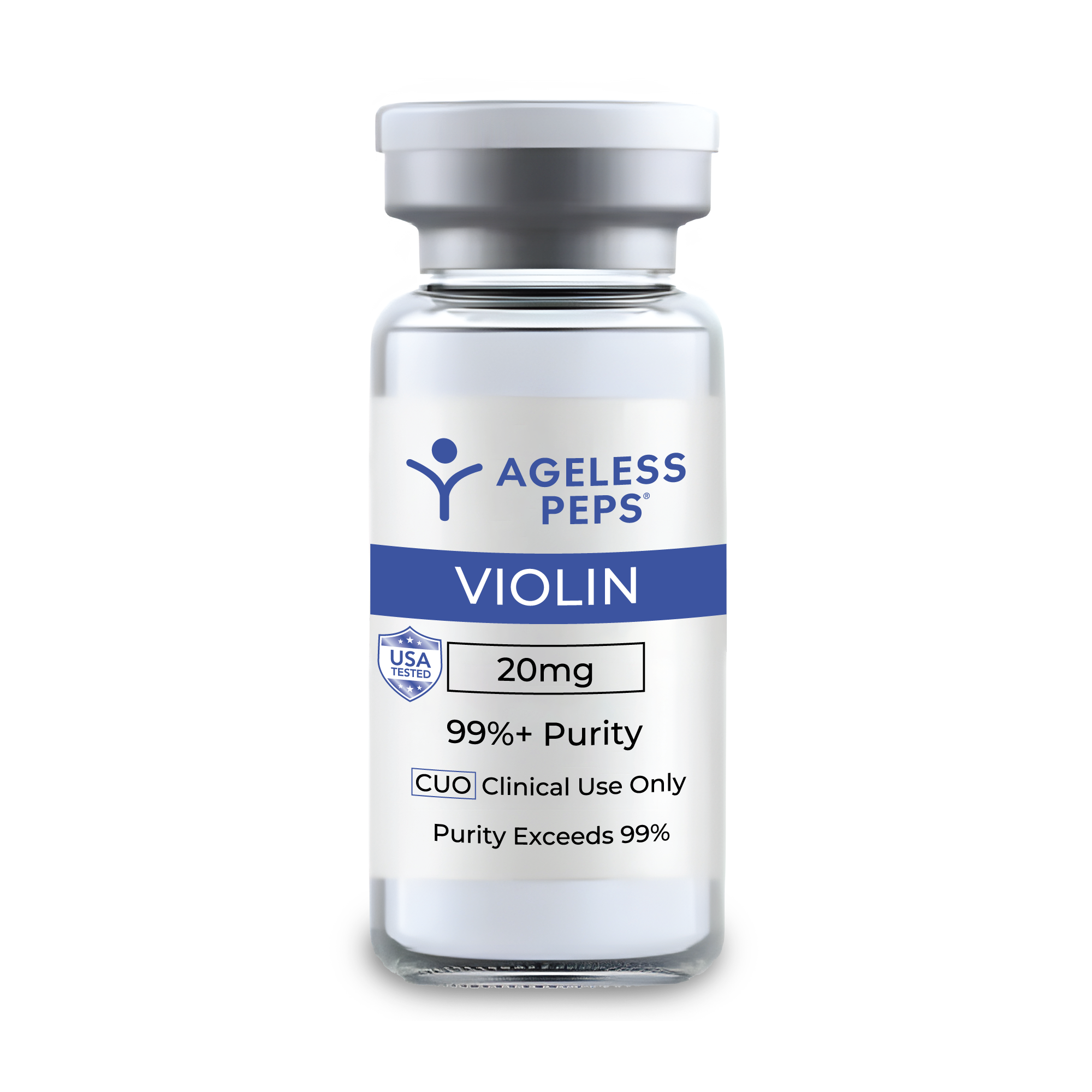
Vilon is a synthetic dipeptide bioregulator (Lys-Glu) developed by Professor Vladimir Khavinson, representing the shortest bioactive peptide in the Khavinson family at only two amino acids (~275 Da). Originally isolated from Thymalin thymus extract, it demonstrates measurable effects on immune cell modulation and chromatin remodeling despite its minimal size.
In immunology and longevity research, Vilon is studied for its potential role in T-lymphocyte differentiation, thymic function restoration, chromatin remodeling, immune surveillance, and geroprotective effects including lifespan extension. It is a foundational member of the Khavinson bioregulator peptide family.
$40.00
Available on backorder
Vilon is a synthetic dipeptide bioregulator (Lys-Glu, or KE) developed by Professor Vladimir Khavinson at the St. Petersburg Institute of Bioregulation and Gerontology. It is the shortest bioactive peptide ever documented with significant biological activity in the Khavinson bioregulator family. Originally isolated from the amino acid analysis of Thymalin, a natural thymus extract with established immunomodulating properties, Vilon was identified as one of the key active components responsible for thymic bioregulatory effects. Despite containing only two amino acids, Vilon demonstrates measurable effects on immune cell modulation, chromatin remodeling, and gene expression in preclinical models.
Note: The following observations are derived from preclinical models unless otherwise noted.
1. Immune Modulation and Thymic Function In preclinical studies, Vilon has been shown to modulate the differentiation and functional activity of T-lymphocyte subpopulations, including CD4⁺ and CD8⁺ cells. Animal studies demonstrate that the dipeptide influences thymic microenvironment signaling, supporting the maturation of immunocompetent T-cells and the restoration of immune surveillance capacity in aged or immunocompromised models.
2. Chromatin Remodeling and Gene Regulation As the smallest peptide in the Khavinson bioregulator family (~275 Da), Vilon serves as a model compound for studying minimal peptide-DNA interactions. In vitro experiments demonstrate that the KE dipeptide can penetrate nuclear membranes and interact with heterochromatin structures, influencing the condensation-decondensation transitions that govern transcriptional accessibility of immune-related genes in senescent lymphocyte populations.
3. Lifespan Extension and Tumor Suppression In long-term animal studies, chronic administration of Vilon has been associated with extended mean lifespan and reduced incidence of spontaneous tumor development. Research suggests these geroprotective effects may be mediated through restoration of immune surveillance mechanisms, modulation of apoptotic signaling in transformed cells, and normalization of age-related immune dysfunction.
4. Clinical Research (Human Studies) Vilon and its parent compound Thymalin have been evaluated in human clinical studies conducted at the St. Petersburg Institute of Bioregulation and Gerontology. In a geroprotective study, thymic and pineal peptide bioregulators (including Vilon) were administered to 266 elderly patients over 6-8 years, with treatment applied during the first 2-3 years; results demonstrated improvements in cardiovascular, endocrine, immune, and nervous system function, as well as metabolic homeostasis (Khavinson and Morozov, Neuroendocrinology Letters, 2003). In a separate clinical study, Vilon was administered to 150 patients with type 1 diabetes mellitus, including 30 patients over the age of 50; a significant proportion of treated patients were able to reduce their daily insulin dose by an average of 9 units (Khavinson et al., published in Russian bioregulation literature). These studies, while primarily conducted in Russian clinical settings, represent the earliest human clinical data for Khavinson-class bioregulator peptides.
Our products are made using a freeze-drying (lyophilization) process, which helps keep them stable during shipping for up to 3–4 months.
When the peptide is in its dry powder form, it can be stored at room temperature until you are ready to use it.
Once the peptide is mixed with bacteriostatic water (reconstituted), it should be stored in the refrigerator to maintain freshness and effectiveness. After mixing, the peptide will remain stable for up to 30 days when kept refrigerated.
Freeze-drying works by removing moisture while the peptide is frozen, leaving behind a dry, white powder that stays stable until it is rehydrated. This process helps protect the peptide and extend its shelf life.
After receiving your order, keep peptides away from direct light and heat. If you plan to use them within a few weeks or months, refrigeration below 4°C (39°F) is recommended, though short-term room-temperature storage is generally acceptable for dry peptides.
For long-term storage (several months to years), peptides should be kept in a freezer at −80°C (−112°F) to best preserve their quality and stability.
No COA available for this product.
Important: All peptides offered are intended for in-vitro and pre-clinical research only. Not for human use. Not approved by the US FDA for medical conditions.
Peptides are short chains of amino acids, typically under 50 residues, whereas proteins are much longer and fold into complex structures.
Because peptides are smaller, they tend to:
Bind more selectively to receptors
Have faster biological signaling effects
Be easier to synthesize and modify for research
This makes them ideal for targeted experiments in regeneration, metabolism, and cellular communication.
Ageless Pep provides high-purity, lab-tested research peptides.
The team is dedicated to scientific accuracy and excellent customer support.
The platform serves a community of researchers and scientists committed to innovation.
Depending on the study design, peptides can be researched through:
In-vitro assays
Animal models
Cell cultures
Subcutaneous or intravenous administration (in animals)
Each peptide behaves differently — for example, Semaglutide and Tirzepatide are studied via subcutaneous injections, while others like BPC-157 show effects even when administered orally or parenterally in rodent studies.
Peptides generally require:
Cool, dry storage when lyophilized
Refrigeration after reconstitution
Protection from UV light and temperature fluctuations
This preserves molecular integrity, preventing oxidation or breakdown of amino-acid chains.
Proper storage ensures reproducibility of experimental results.
Our products are made using a freeze-drying (lyophilization) process, which helps keep them stable during shipping for up to 3–4 months.
When the peptide is in its dry powder form, it can be stored at room temperature until you are ready to use it.
Once the peptide is mixed with bacteriostatic water (reconstituted), it should be stored in the refrigerator to maintain freshness and effectiveness. After mixing, the peptide will remain stable for up to 30 days when kept refrigerated.
Freeze-drying works by removing moisture while the peptide is frozen, leaving behind a dry, white powder that stays stable until it is rehydrated. This process helps protect the peptide and extend its shelf life.
After receiving your order, keep peptides away from direct light and heat. If you plan to use them within a few weeks or months, refrigeration below 4°C (39°F) is recommended, though short-term room-temperature storage is generally acceptable for dry peptides.
For long-term storage (several months to years), peptides should be kept in a freezer at −80°C (−112°F) to best preserve their quality and stability.
Scan the QR code or tap the button to apply for clinical-use-only wholesale pricing. Approval is fast and free.
Register as Wholesale →Continuing education and clinical training on peptide therapeutics. Sharpen your protocols and get certified.
Visit the Academy →